Hair Transplant for Women in Panama
Hair loss is not an exclusively male problem. Many women experience thinning hair, loss of density, or a receding frontal hairline, and often live this change with a strong emotional impact. The good news: a hair transplant for women is today a real, natural, and increasingly accessible solution in Panama.
For years, female hair restoration was rarely discussed, but the reality is that hair loss affects a large share of women during their lifetime. In this guide we explain why it happens, how to know if you’re a candidate, and why the DHI technique has become so popular among female patients.
Why do women lose hair?
Female hair loss is usually different from male hair loss. Instead of a receding hairline and crown, diffuse thinning is more common: hair looks less dense on top, the part widens, and overall volume drops. The most frequent causes include:
- Female androgenetic alopecia: a genetic and hormonal factor, the most common cause of progressive thinning.
- Hormonal changes: pregnancy, postpartum, menopause, or thyroid disorders.
- Traction alopecia: very tight hairstyles, extensions, or tight ponytails over the years.
- Telogen effluvium: diffuse shedding from stress, surgery, strict diets, or nutritional deficiencies.
- High frontal hairlines or receding temples.
Identifying the cause is the first step: not all hair loss is solved with a transplant, and a good diagnosis clarifies that.
Is every woman with hair loss a candidate?
Not necessarily, and here is an important difference from men. For a transplant to work you need a stable donor area (healthy hair that isn’t falling out). In some types of diffuse alopecia, shedding also affects the donor area, which can limit surgery. That is why evaluation is essential.
In general, good candidates are women with:
- A high frontal hairline or defined recession.
- Localized thinning with a preserved donor area.
- Traction alopecia with still-viable follicles.
- A desire to rebuild or redesign the hairline.
The DHI technique: why it’s ideal for women
The DHI technique (direct hair implantation) has an advantage female patients especially value: it allows follicles to be implanted among existing hair with great precision and, in many cases, without shaving the entire head. That means you can carry on with your life discreetly while the result matures.
Other advantages for female hair:
- Dense, natural placement among existing hairs.
- Fine control of angle and direction, key to reproducing the female pattern.
- Less handling of the follicle, favoring its survival.
What is the process step by step?
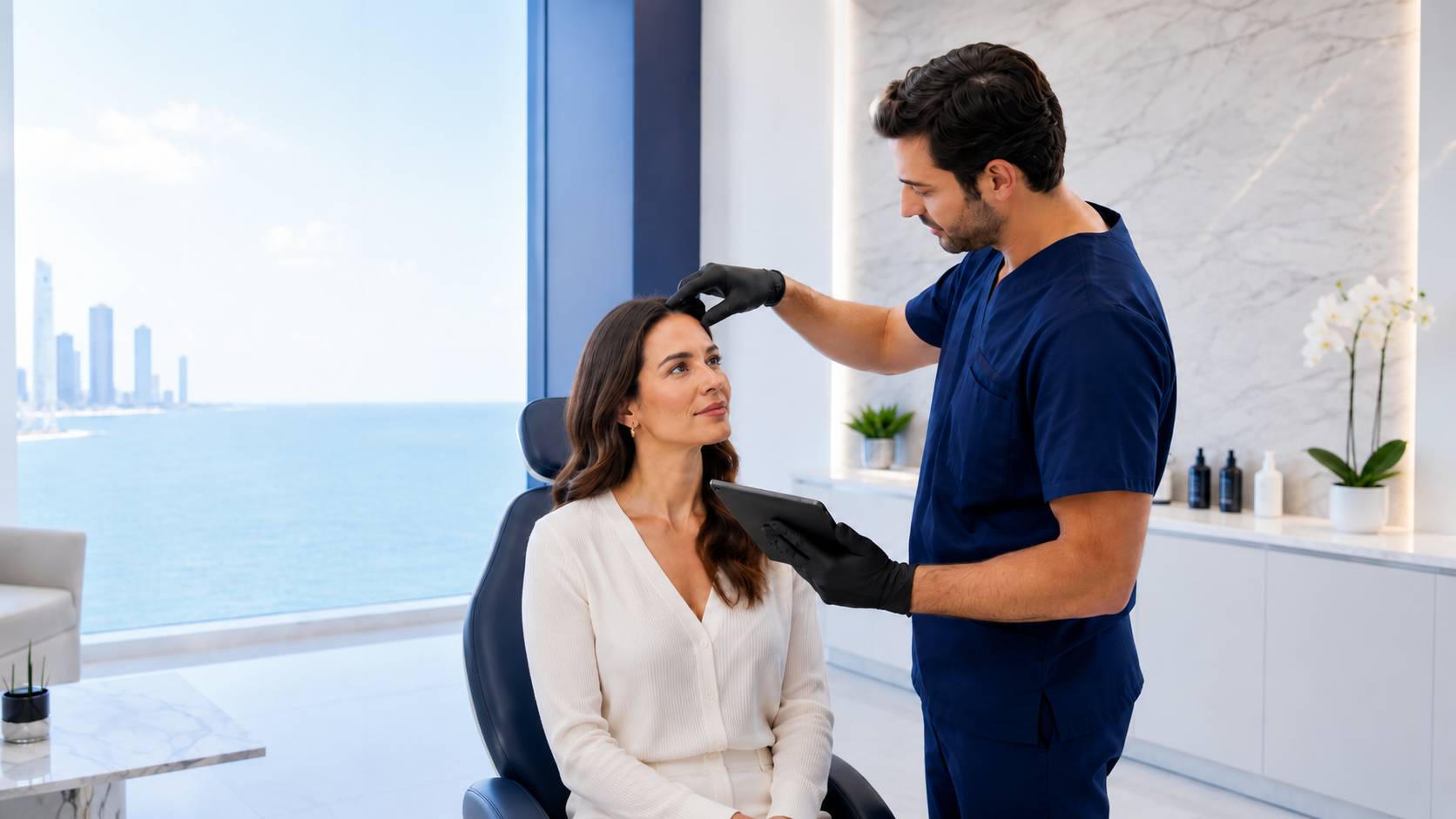
- Diagnosis: the type of alopecia, density, and donor area are assessed.
- Design: the hairline is drawn respecting female facial harmony.
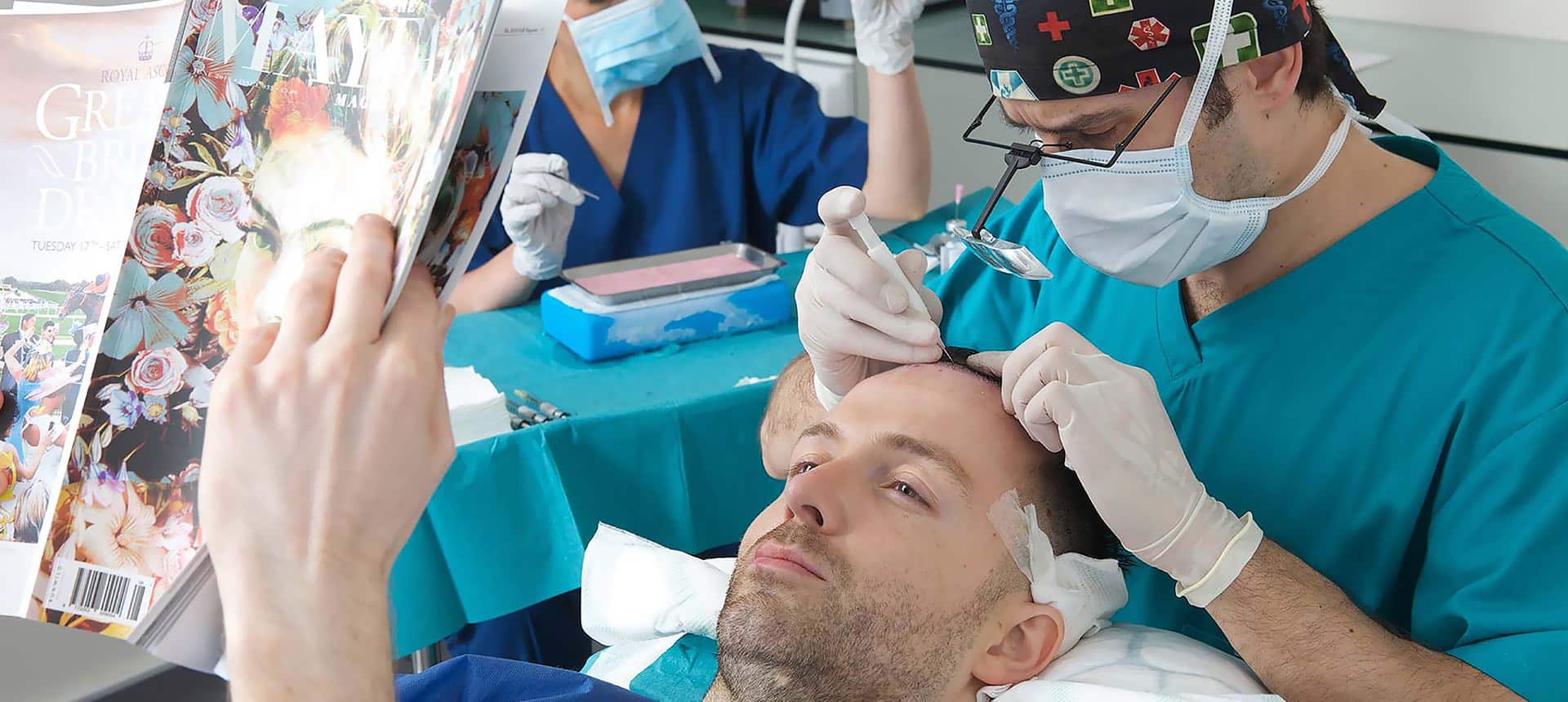
- Extraction: follicles are obtained from the donor area.
- DHI implantation: placed one by one with the Choi implanter.
- Recovery and follow-up: with simple care at home.
When are results visible?
Patience is part of the process. After the transplant, the transplanted hair usually sheds in the first weeks (normal and expected) and then begins to grow permanently. The first changes appear around 3–4 months, and the result is fully visible between 9 and 12 months. The new hair can be styled, cut, and dyed completely normally.
Beyond the transplant, complementary treatments such as hair PRP or mesotherapy help strengthen existing hair. For many patients, the best strategy combines a transplant with maintenance.
Panama: hair restoration medical tourism for women across the region
Panama has consolidated itself as a medical tourism destination in Latin America. For women in the region and in the United States, it offers clinics with the DHI technique, personalized care in English and Spanish, and the convenience of a nearby, safe destination—without the distance of Turkey. Many patients combine their procedure with a few days of rest.
Female vs. male baldness: why they’re approached differently
Although both share mechanisms, hair loss in women has particularities that require its own approach. In men, androgenetic alopecia usually spares the back of the head, which guarantees a stable donor area. In women, thinning tends to be more diffuse and sometimes also affects areas that men preserve, making the donor-area assessment even more important.
The aesthetic goal also changes. It’s rarely about “filling in a receding hairline”: the usual aim is to restore overall density, close a widened part, or lower and round a high frontal hairline while respecting the natural shape of the female face. All of this requires a specific design and very precise implantation, an area where the DHI technique excels.
Complementary treatments for women
A transplant doesn’t always act alone. For many patients, the best strategy combines surgery with therapies that care for existing hair:
- Hair PRP: platelet-rich plasma to stimulate and strengthen the follicle.
- Mesotherapy: nutrients applied directly to the scalp.
- Medical treatment: according to diagnosis and under professional judgment.
- Habit adjustments: avoiding traction hairstyles, excessive heat, and harsh products.
This comprehensive approach not only improves the transplant result but also helps protect the hair you still have.
How to prepare for your transplant
Good preparation improves both the experience and the result. Some general recommendations:
- Have your evaluation in advance to plan dates and expectations.
- Tell the medical team about your history, medication, and hormonal status.
- Rule out reversible causes (nutritional deficiencies, thyroid) before operating.
- Arrive rested and with a healthy scalp on the day of the procedure.
Realistic expectations: the time factor
A female transplant is not instant magic. After the initial shock loss, the new hair grows progressively over the months. Density builds gradually, and the mature result appears between 9 and 12 months. Understanding this timeline avoids frustration and lets you enjoy each stage of the process with peace of mind.
Myths about female hair transplants
“Transplants are only for men”
False. More and more women turn to transplants to restore density, redesign the frontal hairline, or rebuild eyebrows. It’s a perfectly valid solution for the female pattern when an adequate donor area exists.
“I’ll end up looking artificial”
A well-designed transplant is undetectable. The key is respecting the angle, direction, and natural hairline of each face, something the DHI technique controls exceptionally well.
“I’ll have to hide while I recover”
With the option of not shaving the whole head and a discreet recovery, many patients resume their routine within a few days, needing only to follow post-op instructions.
Debunking these myths matters: fear or misinformation lead many women to postpone a solution that could restore their confidence and well-being.
Frequently asked questions
Do I have to shave my whole head?
Not always. With DHI, many patients keep their long hair and only a small, concealable donor area is prepared.
Does the result look natural?
Yes. The key is the hairline design and the implantation angle, tailored to the female pattern.
Does it work for eyebrows or hairlines?
Yes, the transplant is also used to rebuild eyebrows and redesign high frontal hairlines.
Want to know if you’re a candidate? Message us on WhatsApp for your evaluation.