Am I a Candidate for a Hair Transplant?
It’s probably the most important question before taking the step. Not all cases of hair loss are solved the same way, and being a hair transplant candidate depends on several factors a professional assesses before operating. In this guide we explain what’s analyzed and how to know if your case is viable.
A good candidate isn’t simply “someone who lost hair.” It’s someone whose case meets the conditions to achieve a natural, dense, and lasting result. Let’s look at what an evaluation examines.
1. The quality of your donor area
This is the most decisive factor. The donor area—usually the back and sides of the head—provides the follicles to be transplanted. These follicles are genetically resistant to falling out, which is why transplanted hair is permanent. If you have a dense, stable donor area, you have a great foundation for a good result. If the donor area is weak, the plan is adjusted.
2. The degree and pattern of your alopecia
In men, baldness is classified with the Norwood scale (from mild recession to advanced baldness); in women, with the Ludwig scale. Knowing your degree helps estimate how many grafts are needed and what result is realistic. Most degrees are treatable, but the approach changes based on how much surface must be covered relative to the available donor hair.
3. Your hair loss should be relatively stable
If you’re in the middle of rapid shedding, it’s wise to first evaluate why. In very young patients with fast-progressing alopecia, stabilizing with medical treatment before operating is sometimes recommended, to avoid a result that looks uneven over time. This doesn’t rule out a transplant: it plans it better.
4. Your age
There’s no “perfect” age, but there are considerations. In very young patients it’s important to understand how the alopecia will evolve in order to design a hairline that ages well. In mature patients, hair loss tends to be more defined, which makes planning easier. Age is weighed alongside the other factors, not in isolation.
5. Your general health
A hair transplant is an outpatient, safe procedure, but like any intervention it requires a basic check-up. Factors such as uncontrolled chronic conditions, clotting disorders, or certain medications are considered. Most healthy people are eligible; the point of the evaluation is to make sure the procedure is safe for you.
6. Realistic expectations
A good candidate understands what a transplant can and cannot achieve. A transplant redistributes your own hair: it doesn’t create new hair out of nothing or multiply follicles infinitely. With an honest diagnosis, an achievable goal is defined that will leave you satisfied long term.
A sign of a good clinic: it tells you the truth. If your case isn’t ideal for a transplant, a serious team will explain that and offer alternatives instead of operating at all costs.
Who might NOT be a candidate (or need another approach)?
- People with a very weak or insufficient donor area.
- Diffuse alopecias where donor hair is also shedding.
- Certain active scarring alopecias that require prior treatment.
- Unrealistic expectations about density or coverage.
In many of these cases, complementary treatments (PRP, mesotherapy, hair therapies) improve existing hair and sometimes prepare the ground for a future transplant.
How to confirm your candidacy
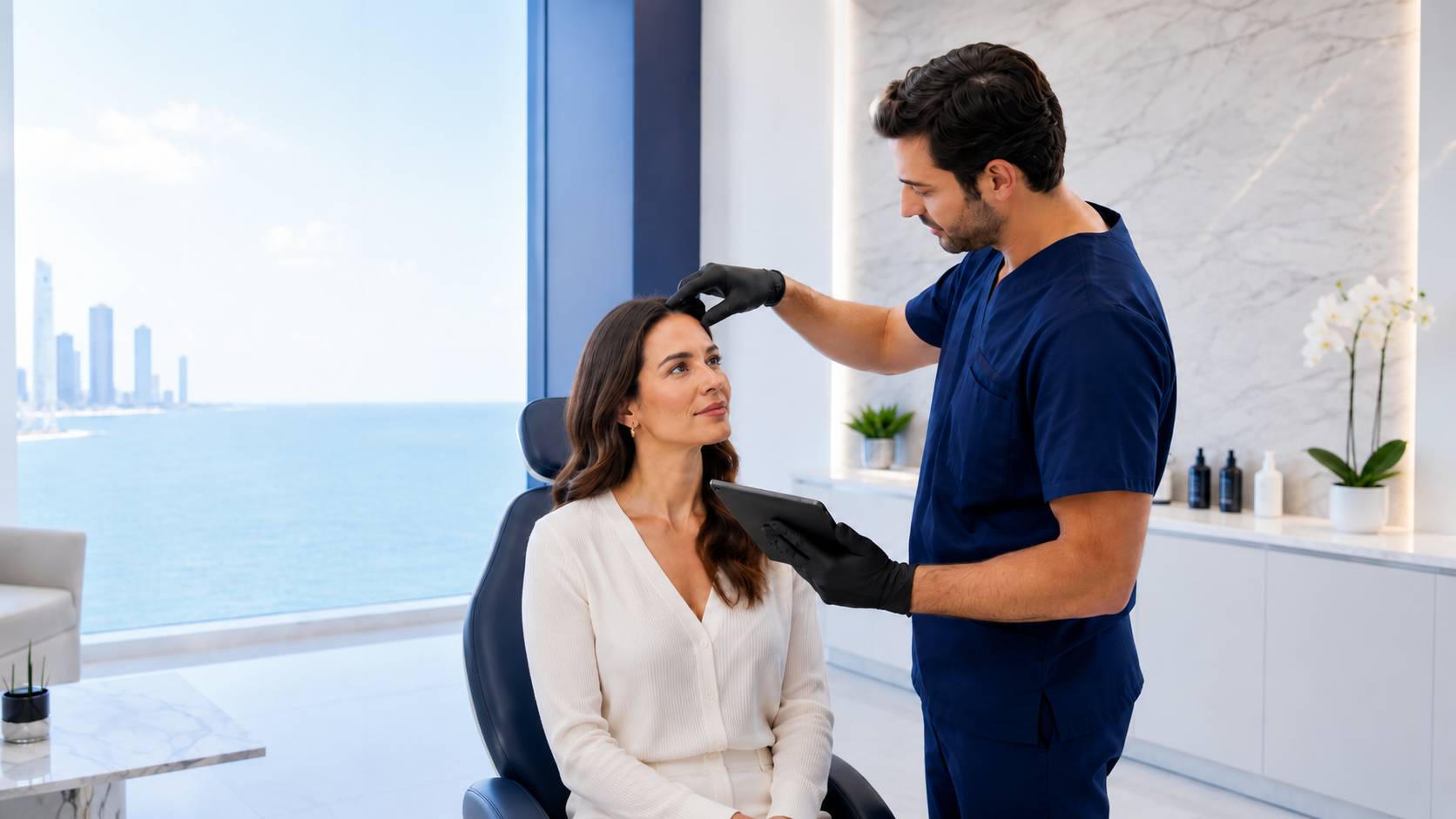
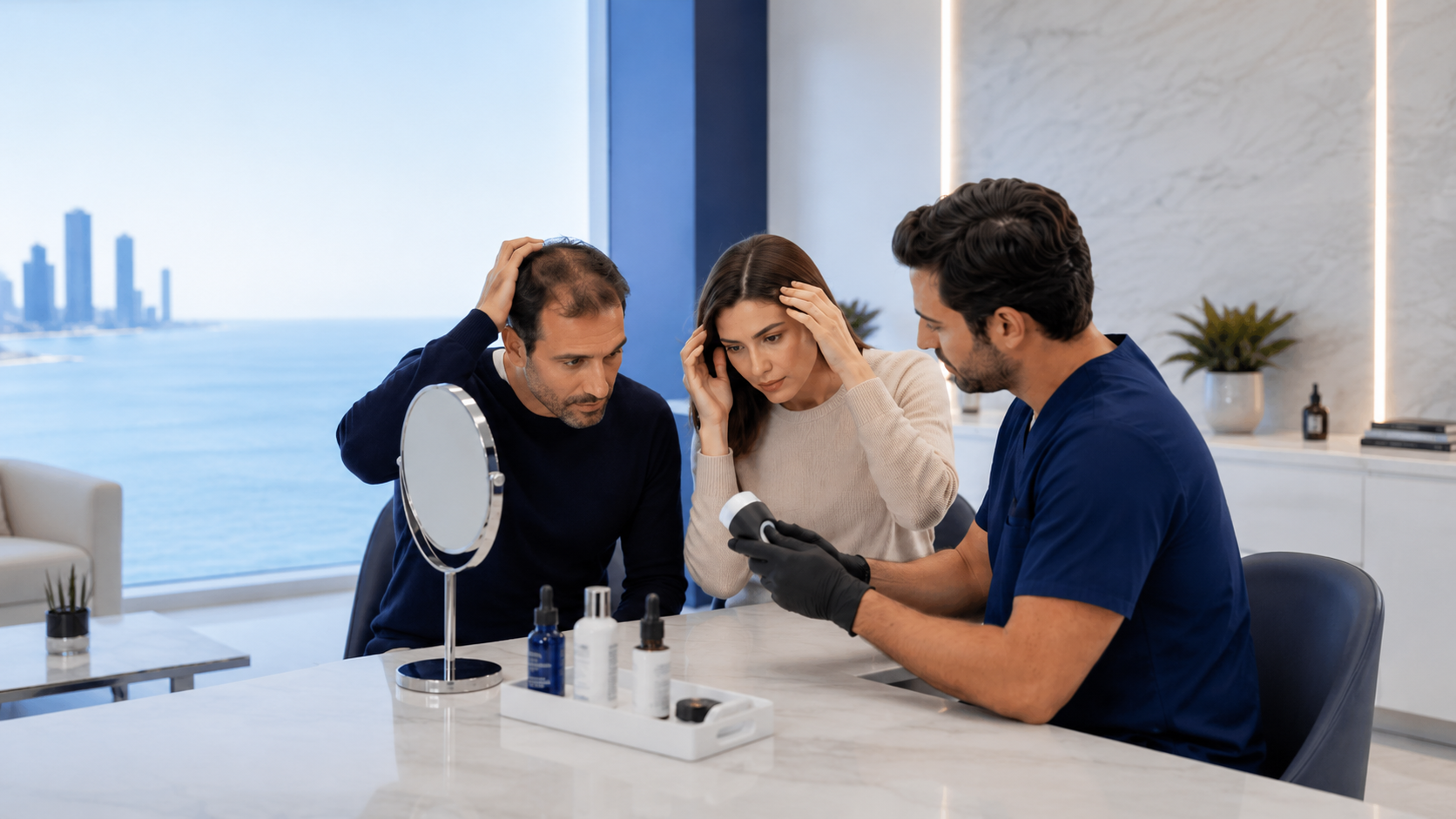
The only way to know for sure is an evaluation. With photos of your scalp or a consultation, the medical team analyzes your donor area, your alopecia pattern, and your goals, and tells you clearly whether you’re a candidate and what result to expect.
Hair restoration medical tourism in Panama
Panama makes the whole process easy for patients from Latin America and the United States: remote evaluation with photos, care in English and Spanish, and the convenience of a nearby, safe destination versus traveling all the way to Turkey. You can learn your candidacy from home and plan your hair transplant in advance.
The Norwood and Ludwig scales, explained
To speak the same language as your doctor, it helps to know the two scales that classify hair loss:
Norwood scale (men)
It describes the progression of male baldness in grades. The early ones show slight recession at the temples; the intermediate ones, more marked recession and crown loss; the advanced ones, the joining of both zones leaving hair only on the sides and nape. Knowing your grade helps estimate grafts and a realistic result.
Ludwig scale (women)
It classifies female thinning, which usually starts with a widening of the central part and a diffuse loss of density on top, generally preserving the frontal hairline. Its grades range from mild thinning to a more evident one.
No scale alone decides your candidacy, but it guides the surgical plan and expectations.
Candidates by age
- Early 20s: possible, but future evolution is studied carefully. Sometimes it’s recommended to stabilize first with medical treatment so as not to design a hairline that ages poorly.
- 30s: often a favorable stage: the pattern is more defined and motivation is high.
- 40s or older: hair loss is usually stabilized, which makes precise, durable planning easier.
Age is always weighed together with the donor area, the alopecia pattern, and the goals.
What to bring (or send) to your evaluation
For an accurate diagnosis, it helps to provide:
- Clear photos of the scalp: front, crown, sides, and nape, in good light.
- A brief history of when the shedding started and how it has progressed.
- Family history of alopecia.
- Current medication and relevant health conditions.
- Your goals: which area concerns you most and what result you expect.
Common mistakes when deciding
Many patients go wrong not for lack of desire, but from rushed decisions: choosing a clinic only by the lowest price, not verifying the team’s experience, ignoring the health of the donor area, or having unrealistic expectations about density. Taking the time for a good evaluation is the best way to avoid these mistakes and protect a resource that doesn’t regenerate: your own hair.
Frequently asked questions
Can I know if I’m a candidate from photos?
A photo evaluation gives a very useful first orientation; definitive confirmation is made by assessing the donor area in detail.
Is there a minimum age?
It’s assessed case by case. In very young patients, the future evolution of the alopecia is studied with special care.
If I’m not a candidate today, could I be later?
In some cases yes, especially after stabilizing shedding with medical treatment.
Want to know if you’re a candidate? Message us on WhatsApp for your evaluation.